

The shift from adjustable to reactive beds
Adjustable bed bases have been around for decades, but they used to just be motorized frames. Now, sensors and software are changing them into tools that react to how you sleep. It is a move from manual positioning to automated response.
Early adjustable bases focused on raising the head or foot of the bed – helpful for reading or easing congestion. Now, those capabilities are a starting point. The current wave of smart bed frames integrates sensors and AI to analyze your sleep patterns and respond accordingly. Amazon.com lists a wide selection of "smart beds" as of late 2023, demonstrating growing consumer interest.
Looking ahead to 2026, I anticipate this trend will accelerate. It's not just about automating comfort; it’s about leveraging data to genuinely optimize sleep. Data-driven insights are becoming more valuable as people recognize the immense impact sleep has on overall health and well-being. The focus is shifting from simply tracking sleep to actively improving it.
This isn’t just a luxury item anymore. While premium pricing currently limits accessibility, the potential health benefits – and the increasing awareness of those benefits – are pushing this technology forward. We're on the cusp of a significant change in how we approach sleep, and the smart bed frame is poised to be at the center of it.
How beds track sleep better than watches
For years, wearable devices like fitness trackers and smartwatches have dominated the sleep tracking market. However, smart bed frames are quickly surpassing these devices in both accuracy and the breadth of data collected. Wrist-based trackers rely on actigraphy – measuring movement – and can be prone to inaccuracies, especially in distinguishing between light sleep and wakefulness.
Smart beds utilize a variety of sensors to provide a more comprehensive picture of your sleep. These include pressure mapping sensors that analyze your body position and weight distribution throughout the night, heart rate variability (HRV) sensors to assess your autonomic nervous system activity, respiration rate sensors to monitor breathing patterns, and highly sensitive movement sensors. This delivers a much more nuanced understanding of your sleep stages.
The benefit of whole-body monitoring is significant. A wrist-worn tracker only captures data from one point on your body. A smart bed, on the other hand, measures data across your entire sleep surface. This provides a more accurate representation of your sleep architecture and allows for the detection of subtle changes that a wrist tracker might miss.
I think the most useful application is sleep apnea detection. If a frame tracks your breathing and position every night, it can spot the interruptions that suggest a problem. It isn't a medical diagnosis, but it is a clear signal to go see a doctor. Companies like Withings and Sleep Number are already testing these sensors for FDA clearance.
- Pressure sensors map where your weight sits to find your exact position.
- Heart rate variability sensors track how your nervous system recovers overnight.
- Respiration Rate: Monitors breathing patterns
- Movement Sensors: Detects subtle movements during sleep
Sleep Tracking Methods: A Comparison
| Method | Accuracy | Data Points | Cost | Convenience |
|---|---|---|---|---|
| Wearable (e.g., Smartwatches, Fitness Trackers) | Variable, generally good for movement-based sleep stages, less accurate for deep sleep. | Heart rate, movement, sleep stages (light, deep, REM), sleep duration. | Typically $50 - $400+ | High. Worn on the body; generally comfortable for most users. |
| Smart Bed | Potentially high, depending on sensor technology. Can provide accurate data on movement and respiration. | Heart rate (some models), respiration rate, movement, sleep stages, sleep duration, potentially environmental factors (temperature, humidity). | Higher initial cost; frames range from $800 - $3000+ | High, once set up. Requires no active user input during sleep. |
| Sleep Study (Polysomnography) | Gold standard for accuracy. Measures a wide range of physiological signals. | Brain waves (EEG), eye movements (EOG), muscle activity (EMG), heart rate, breathing, blood oxygen levels. | Most expensive; typically $1000 - $4000+ per night (clinical setting). | Low. Requires overnight stay in a sleep lab; can be disruptive. |
| Under-Mattress Sensors | Moderate accuracy, primarily focused on movement and heart rate. | Movement, heart rate, respiration rate (estimated), sleep duration. | Approximately $100 - $300+ | Moderate. Placed under the mattress; minimal disruption once installed. |
| Smartphone Apps (using microphone) | Lower accuracy, relies on sound analysis. | Movement (estimated), snoring, sleep sounds. | Generally free or low cost (under $50/year for premium features). | High. Requires phone placement near the bed; potential privacy concerns. |
Illustrative comparison based on the article research brief. Verify current pricing, limits, and product details in the official docs before relying on it.
Current features and what to ignore
The current generation of smart bed frames offers a range of features, some genuinely useful and others… less so. Adjustable bases remain a core component, allowing you to raise the head and/or foot of the bed for reading, watching TV, or alleviating certain medical conditions. Zero-gravity positions, which aim to reduce pressure on the spine, are also common.
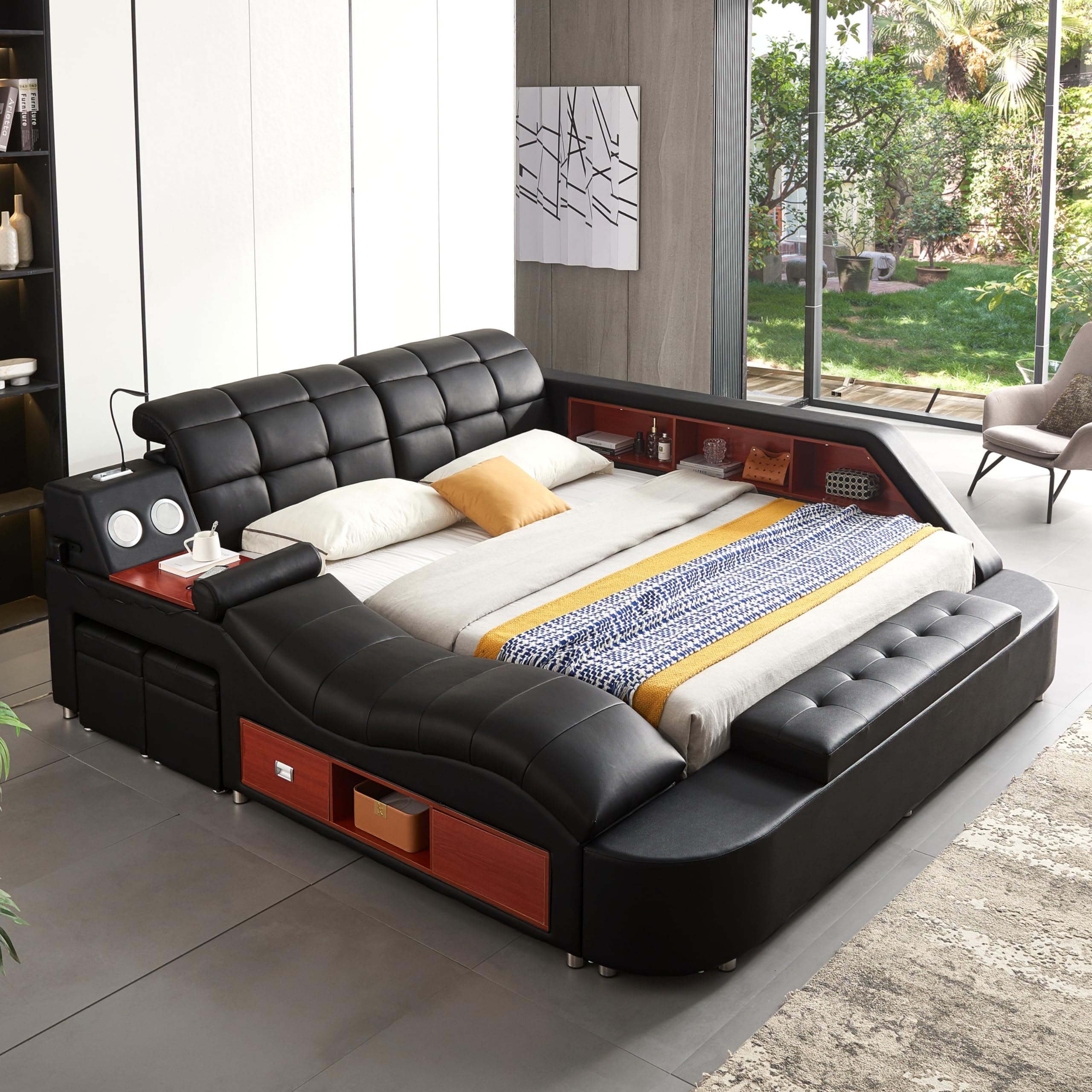
Built-in massage features are frequently included, though their effectiveness varies widely. Under-bed lighting provides a soft glow for nighttime navigation, and USB charging ports are a convenient addition for keeping devices powered up. Bluetooth speakers allow you to play music or white noise directly from the bed frame. Walmart.com's Multifunction Smart King Bed Frame includes many of these features.
The Eight Sleep Pod 3 is a prominent example, offering temperature regulation and sleep tracking capabilities. Sleep Number’s i8 incorporates adjustable firmness settings and sleep tracking. These models represent the higher end of the market, with prices to match. BedMart’s X3 Bedsmart Base is a more basic option, focusing on adjustable positioning.
To be honest, I find some of the more extravagant features – like integrated aromatherapy diffusers – to be more marketing hype than genuine sleep enhancers. A comfortable mattress and a dark, quiet room are still the most important factors for a good night’s sleep. However, the core features – adjustability, temperature control, and accurate sleep tracking – do offer real value.
What beds will do by 2026
By 2026, I expect to see a significant leap in AI-driven personalization. Smart bed frames will move beyond simply tracking your sleep to proactively adjusting to your needs. Imagine a bed that automatically adjusts its firmness based on your body weight and sleep position, or subtly alters the temperature to optimize your sleep stages.
Temperature regulation will become far more sophisticated. Current systems typically offer basic heating and cooling. Future systems will likely incorporate zonal temperature control, allowing for personalized temperature settings for different parts of the body. This is based on the understanding that core body temperature fluctuates throughout the night and impacts sleep quality.
Proactive adjustments to minimize sleep disturbances will also be key. The bed might detect when you’re entering a light sleep stage and subtly adjust the incline to prevent you from fully waking up. Or it could detect snoring and gently elevate your head to improve airflow. These adjustments will be seamless and largely imperceptible to the user.
Integration with other smart home devices will be seamless. Your smart bed will communicate with your smart thermostat to optimize bedroom temperature, with your smart lighting to dim the lights as you fall asleep, and with your smart sound system to play calming music or white noise. This interconnectedness will create a truly immersive sleep environment.
I believe we'll see a shift towards more preventative sleep health features. The bed might analyze your sleep data and identify potential risk factors for sleep disorders, offering personalized recommendations for improving your sleep hygiene. It’s an exciting prospect, but it also raises important questions about data privacy.
Data Privacy & Security Concerns
The collection of highly personal sleep data by smart bed frames raises legitimate privacy concerns. What data is being collected? How is it being stored? Who has access to it? These are critical questions that consumers need to ask. While most manufacturers claim to prioritize data security, the potential for breaches and misuse remains.
Robust encryption is essential to protect sensitive sleep data. Data should be anonymized and aggregated whenever possible. Users should have clear control over their data and the ability to opt-out of data collection. Transparency is crucial—companies need to be upfront about their data practices.
I don't trust every manufacturer to keep this data private. Your sleep patterns are valuable to insurance companies and drug manufacturers. Without strict laws, there is a high risk that your nightly heart rate and movement data will be sold to the highest bidder.
Security vulnerabilities are also a concern. A compromised smart bed frame could potentially be hacked, allowing unauthorized access to personal data or even control over the bed’s functions. Regular security updates and robust cybersecurity measures are essential to mitigate these risks. Consumers should also be diligent about updating their own home network security.
Compatibility & Ecosystem Lock-In
Compatibility is a significant consideration when choosing a smart bed frame. Will it work with your existing mattress? Some frames are designed to work specifically with certain types of mattresses, while others are more versatile. It’s important to check compatibility before making a purchase.
Integration with existing smart home ecosystems is also crucial. Does the bed frame work with Amazon Alexa, Google Assistant, or Apple HomeKit? Seamless integration will simplify control and automation. It's frustrating when a bed only works flawlessly with their proprietary app.
Vendor lock-in is a potential issue. Some manufacturers create closed ecosystems, requiring you to use their apps and services. This limits your flexibility and control. The rise of open-source platforms and standardized APIs could help to address this issue, allowing for greater interoperability.
Ideally, we’ll see a move towards more open standards that allow smart bed frames to communicate with a wider range of devices and platforms. This will empower consumers to create customized sleep environments without being locked into a single vendor’s ecosystem.
Cost Breakdown: Frames and Subscriptions
Smart bed frames represent a significant investment. The upfront purchase price typically ranges from $800 to $3,000 or more, depending on the features and brand. Basic adjustable bases are on the lower end of that range, while fully featured smart beds with AI capabilities can easily exceed $2,000.
Some manufacturers also charge ongoing subscription fees for access to premium features, such as advanced sleep analysis or personalized coaching. These subscriptions can range from $10 to $50 per month. It’s important to factor these ongoing costs into your overall budget.
Comparing pricing across different brands is essential. Eight Sleep and Sleep Number tend to be among the most expensive options, while more affordable alternatives are available from brands like Lucid and Leggett & Platt. However, be wary of sacrificing quality for price.
The potential return on investment should also be considered. Improved sleep quality can lead to increased productivity, better health, and a higher quality of life. While it’s difficult to quantify these benefits, they should be factored into your decision-making process. The upfront cost is substantial, but the long-term benefits could outweigh the expense.
Content is being updated. Check back soon.


No comments yet. Be the first to share your thoughts!