

Beyond Counting Sheep: What Smart Bed Frames Actually Offer in 2026
The term "smart bed frame’ gets thrown around a lot, but what does it actually mean in 2026? It"s moved beyond a simple adjustable base. A basic smart bed frame uses technology to improve how you feel and sleep. This typically includes features like adjustable firmness, automated sleep position adjustments, and detailed sleep tracking. A lot of the current hype focuses on 'sleep optimization', but I think the biggest draw for most people will continue to be personalized comfort—finding your perfect sleep setup.
The core components generally fall into three categories: an adjustable base allowing for head and foot elevation, integrated sensors for sleep tracking, and connectivity to other smart home devices. The market is currently populated by a mix of established bedding companies like Sleep Number and newer players focusing specifically on IoT-enabled sleep solutions. Amazon and Wayfair currently list a wide range of options, with prices varying dramatically. You can find basic adjustable frames for around $800, but frames with advanced sensors and connectivity can easily exceed $2,000.
However, the value proposition isn’t always clear. Some features feel gimmicky, while others offer genuine benefits. It's important to differentiate between a frame that simply collects data and one that uses data to actively improve your sleep experience. We’re seeing a shift towards frames that integrate with existing sleep ecosystems, rather than trying to be all-in-one solutions. This allows for more flexibility and personalization.
Looking ahead to 2026, I expect to see more emphasis on preventative health features. Frames could potentially monitor for early signs of sleep apnea or other sleep disorders, prompting users to seek medical attention. But that also raises a lot of data privacy concerns, which we’ll discuss later.

The Core Technologies: Sensors, Connectivity, and Data Privacy
The technology inside these frames is getting more sophisticated. The sensors are the foundation, and they're becoming increasingly sophisticated. Most frames use pressure sensors to detect your body weight and distribution, which informs adjustable firmness settings. Motion sensors track movement throughout the night, providing data on sleep stages. More advanced frames are starting to incorporate heart rate sensors, and some are even exploring the use of breathing sensors to monitor for sleep apnea.
Connectivity is how you actually use these features. The vast majority connect via Wi-Fi, allowing for seamless integration with other smart home devices and cloud-based data storage. Bluetooth is also common, particularly for initial setup and direct connection to a smartphone app. We're starting to see a few frames experimenting with Zigbee, a low-power wireless protocol that's well-suited for smart home applications. The choice of protocol impacts range, battery life, and potential interference.
However, all this data collection raises serious data privacy concerns. What information is being collected, how is it stored, and who has access to it? It's essential to read the privacy policy carefully before purchasing a smart bed frame. Look for frames that offer end-to-end encryption and allow you to control what data is shared. The potential for open-source firmware or APIs is a promising development, as it would allow users to customize the software and enhance their privacy.
Currently, many brands are cagey about the specifics of their data handling practices. There's a real need for greater transparency and standardization in this area. Users should have the right to access, modify, and delete their sleep data. It's also worth considering whether the frame stores data locally or in the cloud – local storage generally offers greater privacy.
- Pressure Sensors: Detect body weight and distribution.
- Motion Sensors: Track movement and sleep stages.
- Heart Rate Sensors: Monitor heart rate variability.
- Breathing Sensors: Detect respiratory patterns (emerging technology).
Connectivity Protocol Comparison for Smart Bed Frames
| Protocol | Security | Range | Power Consumption | Interference |
|---|---|---|---|---|
| Wi-Fi | Medium | High | High | High |
| Bluetooth | Medium | Medium | Low | Medium |
| Zigbee | High | Medium | Low | Low |
| Cellular | Medium | High | Medium | Medium |
| Thread | High | Medium | Low | Low |
| Z-Wave | High | Medium | Medium | Medium |
Illustrative comparison based on the article research brief. Verify current pricing, limits, and product details in the official docs before relying on it.
Adjustable Bases: More Than Just a Recline Feature
Adjustable bases are a cornerstone of many smart bed frames, and they’ve come a long way from the days of simply being able to sit up and read in bed. While that's still a popular use case, the health benefits are becoming increasingly recognized. Elevating the head can help relieve snoring and acid reflux, while lifting the feet can improve circulation. The ability to adjust the lumbar region provides customized support for the lower back.
Different types of adjustments are available, ranging from simple head and foot elevation to more advanced features like lumbar support and massage. The quality of the motors used is a key factor to consider. Look for frames with quiet, durable motors that can handle the weight capacity. A heavier weight capacity isn’t just for couples; it also indicates a sturdier build overall. Noise level is often overlooked, but a noisy motor can be incredibly disruptive to sleep.
I'm seeing more and more frames with "zero gravity’ positions becoming standard. This position, which elevates both the head and feet to a specific angle, is designed to reduce pressure on the spine and promote relaxation. It’s a nice feature, but it"s not a miracle cure. The effectiveness of these positions varies from person to person.
The longevity of the motors is also important. Many manufacturers offer warranties on the motors, but it's worth reading the fine print. Some warranties only cover replacement parts, not labor costs. Expect to pay between $500 and $1500 for a quality adjustable base, depending on the features and weight capacity.
- Head Elevation: Relieves snoring and acid reflux.
- Foot Elevation: Improves circulation.
- Lumbar Support: Provides customized lower back support.
- Zero Gravity Position: Reduces pressure on the spine.
Sleep Tracking Integrated: Accuracy, Metrics, and What to Do with the Data
Many smart bed frames boast integrated sleep tracking capabilities, but the real question is: how accurate are they? The accuracy of these sensors can vary significantly depending on the technology used and the quality of the implementation. Generally, they are less accurate than dedicated sleep trackers like Fitbits or Oura Rings, which use a combination of motion, heart rate, and skin temperature sensors.
The metrics tracked typically include sleep stages (light, deep, REM), heart rate variability (HRV), movement, and time spent in bed. HRV is a particularly interesting metric, as it can provide insights into your stress levels and overall health. However, interpreting this data can be challenging without a proper understanding of sleep physiology. It's easy to get lost in the numbers without knowing what they actually mean.
The value of the data depends on what you do with it. Simply knowing how long you slept isn’t particularly useful. But if the frame can identify patterns in your sleep and suggest adjustments to your sleep environment or routine, it can be a valuable tool. Integration with sleep coaching apps is a growing trend, allowing you to receive personalized recommendations based on your sleep data. I’ve found that some of the apps are better than others at providing actionable insights.
Sleep tracking data is only one piece of the puzzle. It shouldn’t be used to self-diagnose or treat any medical condition. If you have concerns about your sleep, it's always best to consult with a healthcare professional. A smart bed frame can supplement a healthy sleep routine, but it’s not a replacement for it.
- Sleep Stages: Light, deep, REM.
- Heart Rate Variability (HRV): Indicator of stress and health.
- Movement: Tracks tossing and turning.
- Time in Bed: Overall sleep duration.
Smart Home Integration: Ecosystem Compatibility and Voice Control
A smart bed frame doesn’t operate in isolation. The ability to integrate with other smart home devices is a key selling point for many consumers. This allows you to create automated routines that optimize your sleep environment. For example, you could set the bed to automatically adjust to a sleep-friendly position when you say “Goodnight Alexa.”
Compatibility with major ecosystems like Amazon Alexa, Google Assistant, and Apple HomeKit is essential. Most frames offer integration with at least one of these platforms, but not all offer support for all three. It’s important to check compatibility before purchasing a frame, especially if you’ve already invested in a particular smart home ecosystem. I’ve found that Alexa integration tends to be the most common.
IFTTT (If This Then That) support is another valuable feature. IFTTT allows you to create custom automation recipes that connect different smart home devices and services. For example, you could set the bed to automatically lower the thermostat when you get into bed. This level of customization can significantly enhance your sleep experience.
The level of integration varies widely. Some frames only offer basic control, such as turning the bed on or off. Others offer more advanced control, such as adjusting the firmness or setting sleep schedules. It’s important to understand the limitations of the integration before making a purchase. Don’t assume that a frame will seamlessly integrate with all of your existing smart home devices.
Recent User Experiences with Smart Bed Frame & Smart Home Integration (Late 2023 - Early 2024)
| Platform | Smart Home Ecosystem | Reported Experience | Key Observation |
|---|---|---|---|
| X (formerly Twitter) | Amazon Alexa | User reported difficulty getting their smart bed frame to consistently respond to voice commands for adjusting bed position. | Integration appears reliant on stable Wi-Fi and potentially the specific Alexa skill associated with the bed frame manufacturer. |
| X (formerly Twitter) | Google Home | User praised the seamless integration with their Google Home setup, enabling bed adjustments and sleep data synchronization with Google Fit. | Highlights the potential for smoother experiences when the bed frame's ecosystem is well-aligned with the smart home platform. |
| X (formerly Twitter) | Apple HomeKit | User expressed frustration with the lack of direct HomeKit support for their smart bed frame, requiring workarounds using third-party apps. | Demonstrates a gap in compatibility for users heavily invested in the Apple ecosystem. |
| X (formerly Twitter) | Samsung SmartThings | User noted that while the bed frame connected to SmartThings, the functionality was limited to basic on/off control, lacking advanced features like sleep stage integration. | Suggests varying levels of feature support depending on the smart home platform and the bed frame's integration capabilities. |
| X (formerly Twitter) | Amazon Alexa | User reported successful creation of routines that adjusted the bed based on sunrise/sunset times, enhancing their wake-up experience. | Illustrates the benefit of automation features within a connected sleep environment. |
| X (formerly Twitter) | IFTTT | User successfully used IFTTT to connect their smart bed frame to other smart devices, such as dimming lights when the bed was put into sleep mode. | Demonstrates the value of IFTTT as a bridge for integrating devices from different manufacturers and ecosystems. |
| X (formerly Twitter) | Google Home | User complained about inconsistent data reporting from their smart bed frame to Google Fit, leading to inaccurate sleep tracking. | Highlights the importance of reliable data synchronization between the bed frame and the health/fitness platform. |
| X (formerly Twitter) | Apple HomeKit (via Homebridge) | User achieved HomeKit integration using Homebridge, but noted the setup was complex and required technical expertise. | Indicates that while workarounds exist for unsupported ecosystems, they often come with increased complexity. |
Illustrative comparison based on the article research brief. Verify current pricing, limits, and product details in the official docs before relying on it.
Beyond the Basics: Emerging Features and Future Trends
What's on the horizon for smart bed frames? Several emerging features are poised to revolutionize the way we sleep. Temperature regulation is one of the most promising developments. Integrated heated or cooled mattresses can maintain your ideal sleep temperature throughout the night, which can improve sleep quality. Some companies are already offering frames with built-in cooling systems.
Aromatherapy diffusion is another interesting trend. Frames with built-in diffusers can release calming scents like lavender or chamomile to promote relaxation and sleep. Biometric feedback is also gaining traction. Frames with advanced sensors can monitor your physiological responses and automatically adjust the bed to optimize your sleep. This could involve adjusting the firmness, elevation, or temperature.
I anticipate that AI-powered sleep optimization will become increasingly common. Frames could use machine learning algorithms to analyze your sleep data and personalize your sleep experience. This could involve identifying patterns in your sleep and suggesting adjustments to your routine or environment. Edge computing, which involves processing data locally on the frame, could also play a role in enhancing privacy and reducing latency.
Long-term, we might even see frames that can diagnose sleep disorders or provide therapeutic interventions. But those applications are still years away. The biggest hurdle will be ensuring the accuracy and reliability of the sensors and algorithms. There’s a lot of potential, but a lot of work still needs to be done.
High-End Smart Bed Frame with AI Optimization Price Prediction 2026
Bull / Base / Bear scenario analysis
| Timeframe | Bull Case | Base Case | Bear Case | Key Driver |
|---|---|---|---|---|
| 1 Month | $2,800-$8,500 | $2,600-$8,200 | $2,300-$7,500 | Early adopter demand and CES 2026 technology showcase impact |
| 3 Months | $3,200-$9,200 | $2,800-$8,600 | $2,200-$7,200 | Q1 production scaling and supply chain optimization |
| 6 Months | $3,800-$10,500 | $3,100-$9,200 | $2,000-$6,800 | Mid-year market penetration and competitor response |
| 1 Year | $4,500-$12,000 | $3,500-$10,200 | $1,800-$6,200 | Mass market adoption vs. economic headwinds and feature commoditization |
Price Prediction Summary
Smart bed frame prices expected to rise 20-40% over 12 months driven by AI integration and IoT capabilities, though economic uncertainty and increasing competition may pressure premium segments. Base case suggests steady growth with price stabilization in mid-tier market.
Key Factors Affecting High-End Smart Bed Frame with AI Optimization Stock Price
- AI chip costs and processing power improvements
- Consumer discretionary spending on premium sleep technology
- Supply chain efficiency and manufacturing scale economies
- Competitive pressure from traditional furniture manufacturers entering smart market
Disclaimer: Predictions are speculative and not financial advice. Stock price predictions are based on current market analysis and may vary significantly due to market volatility, economic conditions, and other unpredictable factors. Always do your own research before making investment decisions.
Troubleshooting and Maintenance: Keeping Your Smart Bed Running Smoothly
Let's be realistic – tech glitches happen. Even the most reliable smart bed frames can experience issues. Connectivity problems are common, so make sure your Wi-Fi network is stable and the frame is within range. If the frame is not responding to voice commands, check the integration settings and make sure the frame is properly linked to your smart home ecosystem.
Motor failures are another potential issue. If the motor is making unusual noises or the bed is not adjusting properly, it’s time to investigate. Check the power cord and make sure it’s securely plugged in. If the problem persists, contact the manufacturer or a qualified repair technician. Attempting to repair the motor yourself could void the warranty.
Basic maintenance can help prolong the life of your smart bed frame. Regularly dust the frame and vacuum underneath it to prevent dust buildup. Check the screws and bolts periodically to ensure they are tight. Follow the manufacturer’s instructions for cleaning and lubricating the moving parts.
Finding reliable DIY repair resources can be challenging. Many manufacturers don’t provide detailed repair manuals or parts diagrams. YouTube can be a helpful resource, but be cautious about following instructions from unqualified sources. When in doubt, it’s always best to call a professional. It's worth asking the manufacturer about the availability of replacement parts before you purchase the frame.
Choosing the Right Smart Bed Frame: A Buyer's Guide
So, you're ready to take the plunge and buy a smart bed frame. Here's a guide to help you navigate the options. First, consider your budget. Prices range from around $800 to over $2,000, so set a realistic spending limit. Next, think about the size of your bed and the weight capacity of the frame. Make sure the frame can comfortably support your weight and the weight of your partner.
Features are another important consideration. Do you need an adjustable base? Sleep tracking? Smart home integration? Prioritize the features that are most important to you. Don’t pay for features you won’t use. Data privacy is also crucial. Choose a frame from a reputable manufacturer with a clear and transparent privacy policy.
Compatibility with your existing smart home ecosystem is essential. Make sure the frame supports the platforms you use, such as Amazon Alexa, Google Assistant, or Apple HomeKit. Read reviews from other customers to get an idea of the frame’s reliability and performance. Look for frames with good customer support and a generous warranty.
Reputable brands in the smart bed frame space include Sleep Number, Leggett & Platt, and i8+. Retailers like Amazon, Wayfair, and Saatva offer a wide selection of frames from different manufacturers. Don't be afraid to shop around and compare prices. Ultimately, the best smart bed frame is the one that best meets your individual needs and preferences.
- Budget: Set a realistic spending limit.
- Size & Weight Capacity: Ensure the frame fits your bed and supports your weight.
- Features: Prioritize the features you need.
- Data Privacy: Choose a frame with a transparent privacy policy.
- Compatibility: Check compatibility with your smart home ecosystem.
Top Smart Bed Frames for Enhanced Sleep in 2026
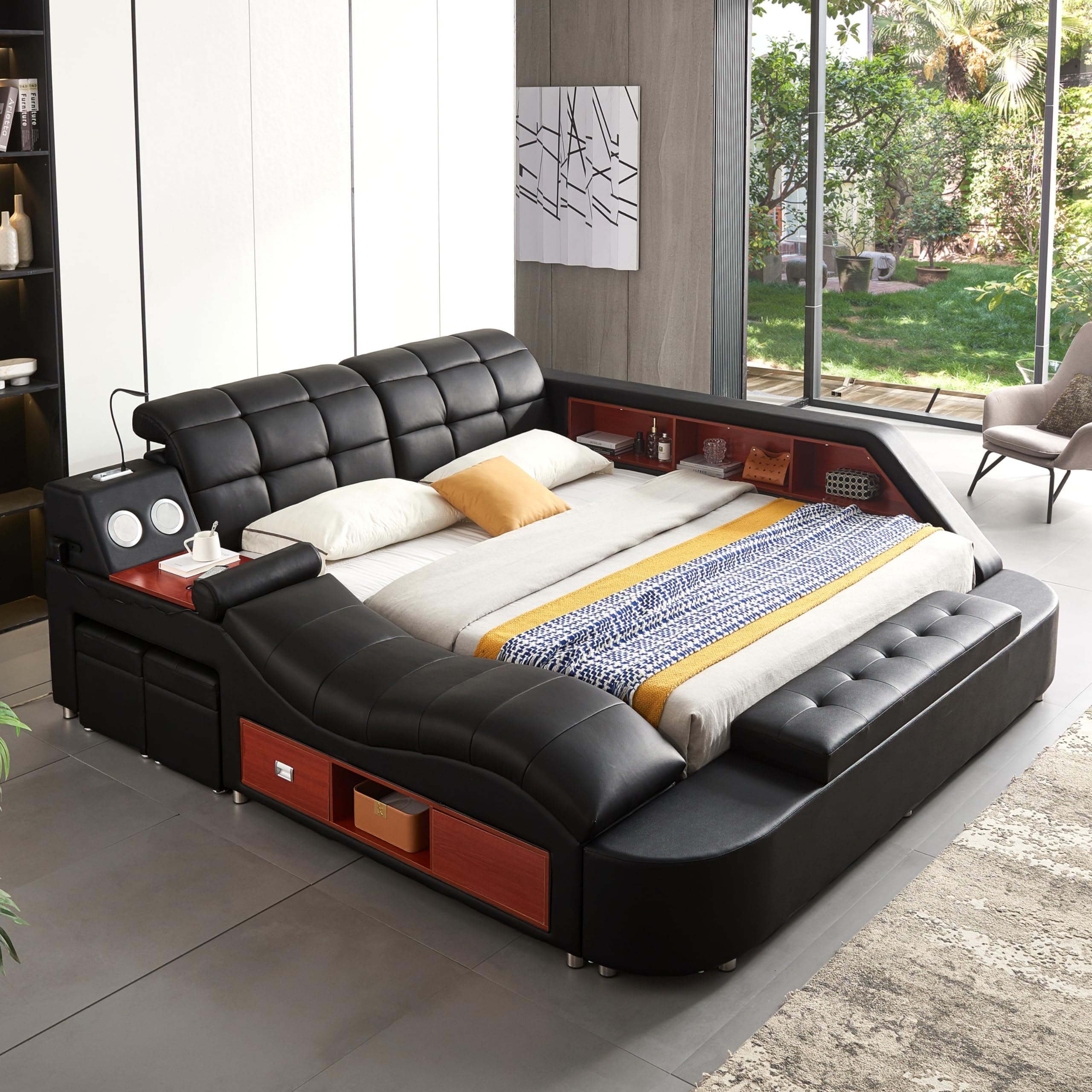
Integrated smart technology for sleep tracking · Adjustable head and foot positions · Quiet motor operation
This frame offers a comprehensive smart sleep experience with its integrated tracking and adjustable features, making it ideal for tech-savvy sleepers.
Micro-adjustments for precise comfort control · Zero gravity and anti-snore presets · Wall-hugging design for space efficiency
For those seeking highly customizable comfort, the Solaire's precise adjustability and smart presets offer unparalleled control over sleep posture.
Full range of articulation for head and foot · Wireless remote with programmable memory positions · Durable steel frame construction
The Reverie 9T provides robust adjustability and user-friendly controls, making it a reliable choice for personalized sleep positions.
Advanced head and foot articulation · Full-body massage with multiple wave intensities · SmartSync™ Bluetooth connectivity for app control
This frame integrates advanced massage features with smart connectivity, offering a luxurious and technologically advanced sleep environment.
Individualized comfort adjustment (Sleep Number setting) · Responsive Air™ technology for automatic adjustments · Sleep tracking and personalized insights via app
The Sleep Number i10 is a top-tier smart bed that actively adapts to your body and sleep needs, providing a uniquely personalized and optimized sleep experience.
As an Amazon Associate I earn from qualifying purchases. Prices may vary.


No comments yet. Be the first to share your thoughts!