

beyond wood: a new look at bed frame sustainability
There’s a growing awareness among consumers about the environmental impact of their purchases, and that extends to the bedroom. We're seeing increased demand for eco-friendly products across the board, but choosing a sustainable bed frame can be surprisingly complex. Traditional bed frames often rely on materials and manufacturing processes that contribute to deforestation, pollution, and carbon emissions.
For a long time, the conversation around "sustainable’ felt a little vague. It’s easy for companies to use the term without backing it up with concrete actions. Here, we"ll try to be specific about what makes a bed frame truly sustainable, looking beyond simple claims and diving into the details of materials, manufacturing, and shipping.
This guide isn’t about finding the perfect bed frame – that might not exist. It's about making informed choices. We’ll explore the options available and help you understand the trade-offs involved, so you can select a bed frame that aligns with your values and minimizes its environmental footprint.
metal frames and recycled content
Metal bed frames, particularly those made from steel and aluminum, are often seen as a more durable and sometimes more affordable option. However, their sustainability isn’t always obvious. The environmental impact of metal production is significant, requiring substantial energy and often relying on resource-intensive mining operations.
The good news is that both steel and aluminum are highly recyclable. Frames made from a high percentage of recycled content can significantly reduce their environmental footprint. Look for manufacturers who specify the percentage of recycled material used in their products. But recycling isn’t the whole story – the energy used in the recycling process itself needs to be considered.
Different metals have different carbon footprints. Aluminum production, for example, is particularly energy-intensive. Responsible manufacturing processes are also crucial. Companies that invest in energy efficiency and utilize renewable energy sources can minimize the environmental impact of metal frame production. It’s difficult to get precise carbon footprint data for specific bed frames, but prioritizing recycled content is a good starting point.
Wood Certification Comparison for Sustainable Bed Frames
| Certification Body | Scope | Verification Process | Cost | Common Criticisms |
|---|---|---|---|---|
| Forest Stewardship Council (FSC) | Global, all forest types | Independent on-site audits assessing forest management against FSC Principles & Criteria. Includes chain of custody tracking. | Variable, depends on forest size and audit complexity. Can range from a few hundred to tens of thousands of dollars annually. | Concerns about the cost for small forest owners, potential for 'greenwashing' if chain of custody isn't rigorously maintained, and varying interpretations of standards. |
| Programme for the Endorsement of Forest Certification (PEFC) | Global, all forest types | Independent third-party certification against PEFC standards, which are developed nationally and internationally. Focuses on adherence to legal requirements and sustainable practices. | Generally lower cost than FSC, as it often utilizes existing national forestry certifications. Costs vary by country and forest size. | Criticized for allowing national standards that may be less stringent than FSC, and for a perceived lack of transparency in some national implementations. |
| Sustainable Forestry Initiative (SFI) | North America | Independent third-party audits based on SFI Standards, covering forest management, fiber sourcing, and chain of custody. Emphasis on multiple benefits including wildlife habitat and water quality. | Cost varies depending on the size and complexity of the operation. SFI offers a tiered certification system affecting costs. | Historically criticized for its origins as an industry-led initiative, though it has increased independent oversight. Some concerns remain regarding the stringency of standards compared to FSC. |
| California Air Resources Board (CARB) – Upholstered Furniture & Bedding | California (specifically for products sold within the state) | Testing of finished products for formaldehyde emissions. Requires labeling indicating compliance with emission standards. | Costs are borne by manufacturers to conduct testing and comply with labeling requirements. | Focuses solely on formaldehyde emissions and does not address broader sustainability concerns related to forest management or material sourcing. |
| Rainforest Alliance | Tropical Forests | Certification assesses farms and forests against standards that promote biodiversity, ecosystem services, and responsible land management. | Costs vary depending on the size and complexity of the operation. | Some critiques suggest that the Rainforest Alliance certification, while valuable, doesn't always guarantee complete elimination of unsustainable practices. |
Illustrative comparison based on the article research brief. Verify current pricing, limits, and product details in the official docs before relying on it.
upholstery and non-toxic finishes
The environmental impact of a bed frame extends beyond the structural materials. Upholstery fabrics and finishes can release harmful volatile organic compounds (VOCs) into the air, impacting indoor air quality and potentially posing health risks. Traditional paints, stains, and adhesives often contain high levels of VOCs.
Fortunately, there are sustainable alternatives. Organic cotton, linen, and hemp are all excellent choices for upholstery fabrics. Recycled polyester, made from plastic bottles, is another option, though microfiber shedding is a consideration. When choosing a fabric, look for certifications like GOTS (Global Organic Textile Standard) to ensure it meets strict environmental and social criteria.
The California Bureau of Household Goods and Services (bhgs.dca.ca.gov) has strict regulations on VOC emissions from upholstered furniture and bedding products. These regulations are among the most stringent in the country and provide a good benchmark for identifying safer products. Manufacturers are required to label their products with information about VOC emissions.
Water-based finishes are safer than solvent-based options. They emit fewer gases and don't carry the same chemical odor. Look for products that are labeled as low-VOC or zero-VOC. Prioritizing natural and non-toxic materials in both upholstery and finishes is a key step towards a healthier and more sustainable bedroom.
shipping and packaging waste
A truly sustainable bed frame doesn't stop at the manufacturing process. The environmental impact of shipping and packaging can be substantial, contributing to carbon emissions and generating waste. Companies are increasingly investing in carbon-neutral shipping options, offsetting their emissions through projects like reforestation or renewable energy development.
Look for companies that offer carbon-neutral shipping or that partner with organizations dedicated to environmental conservation. The use of recycled and biodegradable packaging materials is also crucial. Avoid excessive packaging and opt for companies that prioritize minimal waste.
As consumers, we can also minimize the environmental footprint of delivery by consolidating orders, choosing slower shipping options, and properly disposing of packaging materials. Even small changes can make a difference.
brands making sustainable frames
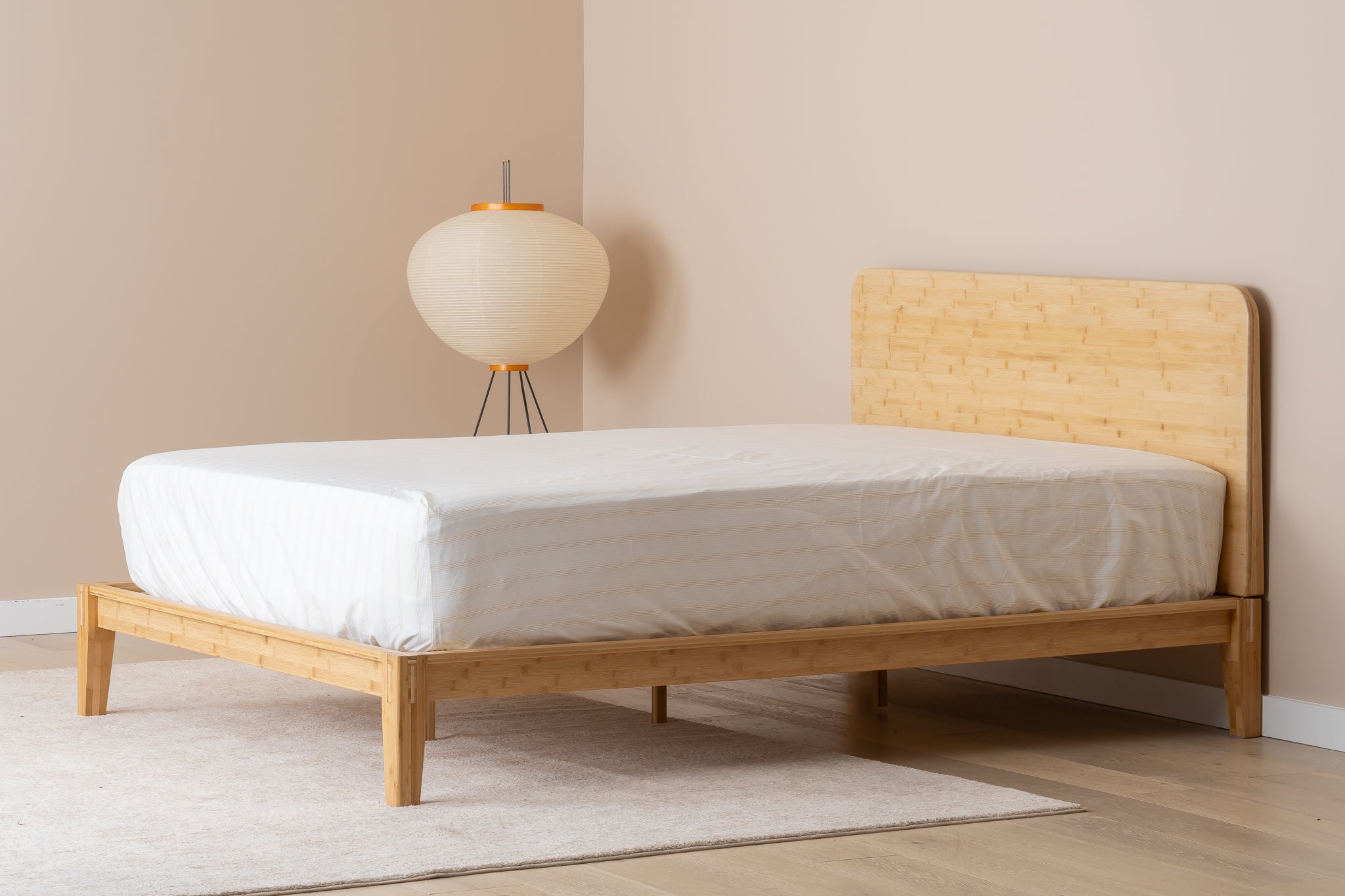
Several brands are demonstrating a genuine commitment to sustainability in the bed frame market. Thuma focuses on minimalist design and uses FSC-certified walnut wood. They also prioritize flat-pack shipping to reduce packaging waste. Avocado Green Mattress (avocadogreenmattress.com) is certified by numerous organizations, including GOTS and GREENGUARD Gold, and uses organic materials throughout their product line.
Medley Home (medleyhome.com) offers handcrafted furniture made in the USA using sustainably sourced wood and non-toxic finishes. They are transparent about their manufacturing processes and committed to ethical labor practices. Floyd (floydhome.com) offers durable, modular bed frames designed to last, and they use recycled materials whenever possible.
None of these companies are perfect. You should still check their latest impact reports before buying. These examples simply show that cleaner manufacturing is possible at scale.
No comments yet. Be the first to share your thoughts!